Élisa Morin on Accepting What Your Body Can and Can’t Do
Veuillez faire défiler vers le bas pour la version française
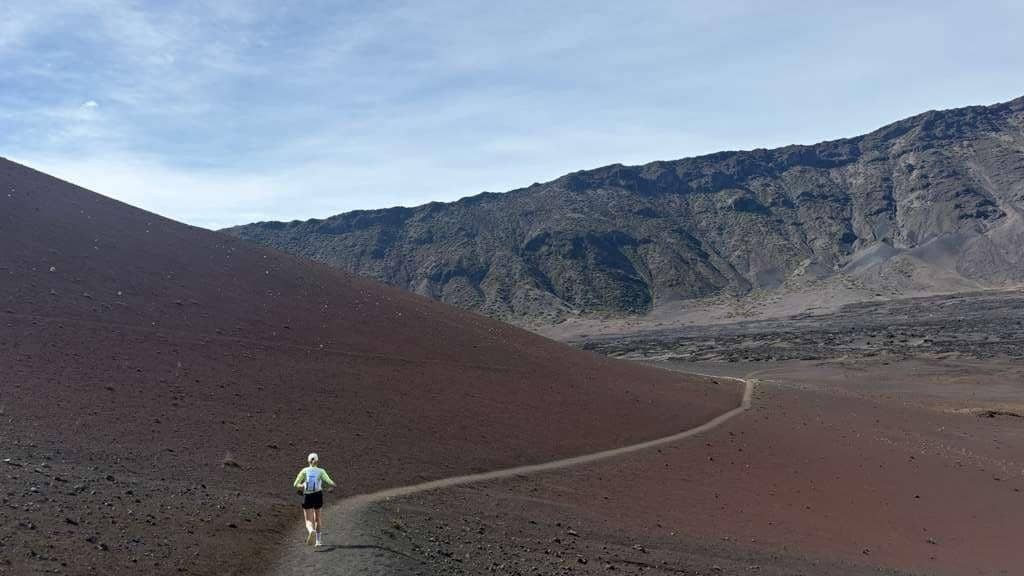
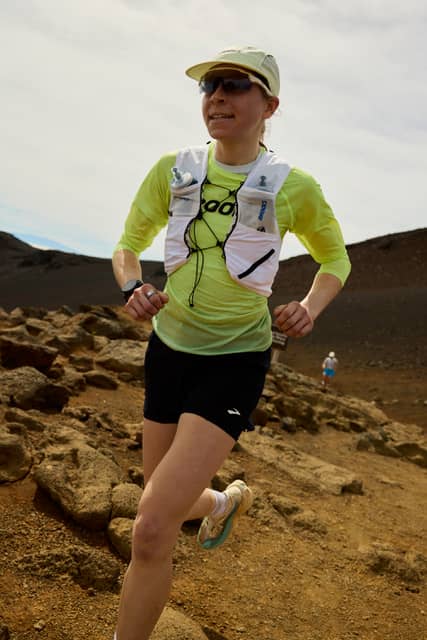
Élisa Morin moved from France to Montreal in January 2020 and turned to trail running as a way to find community. Since then, she has become a five-time Canadian mountain and trail running champion, a top-10 finisher at the WMRC Classic event, and a professional trail runner with Brooks Running.
In 2024, she became the first woman to win back-to-back titles in both the vertical ascent and classic up-and-down races at the Canadian Mountain Running Championships. She repeated the achievement in 2025 and also won the short trail title at the Canadian Trail Running Championships.
But despite her rapid rise in the sport, the journey has not been straightforward. And hers is a story that many athletes who have been through REDs will recognise: one of navigating setbacks, learning hard lessons, and redefining what success really looks like.
I was diagnosed with REDs in 2022 and I’m still navigating the consequences. People don’t talk about the long-term effects enough, which is why I want to."
Élisa has experienced recurring bone injuries, including a stress fracture this year in the same period as one the year before. (And this is something we hear again and again. REDs isn’t just something that affects performance in the moment. It can have lasting impacts that show up months or even years later, often in ways athletes don’t expect.)
I now work with a REDs-informed dietitian, Evelyne Telmosse (also a Project REDs recommended specialist and ambassador), who says it’s because my bone density still isn’t as high as it should be as a consequence of so many years spent in a state of REDs.”
She explains. “It’s also a consequence of poor mechanical stress quantification, too much load and not enough recovery."
I've had a new coach since March, and we started working together when I was on crutches. I told him I wasn’t running at the moment, and that I had an MRI in a few days. I was really transparent with him so he was aware of everything from the beginning. I know that he also coached other athletes who have been in REDs, who are currently a little bit like me, their bodies are not resilient and they are injured a lot as a consequence.”
Always have a snack!
Through working with Evelyne, Élisa has developed practical ways to ensure she is adequately fueled for training. One of the most important lessons has been learning not to compare what she eats with the people around her.
One of the biggest shifts has been letting go of comparison.
Don't be afraid to eat and don't be afraid to eat in front of other people. When you are alone in your home, it's easy to eat a lot, but sometimes in the past, for me at least, I would go out for dinner and not have enough food."
"When I was in a restaurant with others, I felt I should order two main courses because I had a big training day the next day, but then I would second-guess myself. Eventually I learnt that I need to eat and to not be afraid of it. Sometimes I’ll eat something before going to a restaurant, like two or three pieces of toast, and then a main course when I’m out, and other times I order a starter too, or lots of bread. Just because your friends are eating salad, it does not mean you have to. Choose the rice or the pasta, or whatever you want, because you need it - so don’t be afraid of it.
Also don't be afraid to say yes to a dessert when out for dinner, your body probably needs one, even if your friends don't want one. It's also really helpful to socialise with people who aren’t doing sports or at least not to the same level of performance, because often they don't care. When you are going out, always have a snack. I always have a snack with me. Evelyne taught me that.”
Identity beyond the trails
Élisa has been fortunate not to struggle with the mental side of REDs which she attributes to her part time work and that her identity as a person is not wholly linked to her ability to run.
“Trail running is really important in my life but it's easy for me to dissociate with it because I still work. I am a pro athlete, but I still work part time as a civil engineer. I think that’s why I haven’t struggled with the mental side. I know lots of people do, but for me it hasn’t been an issue because it is easy to focus my mind on other things. This year, when I was injured, I just engaged more with work. I think it's really important to try to not define yourself only by the sport you do.”
Acceptance has been a huge part of her REDs recovery and mindset as she navigates its long-term consequences. Building an identity that extends beyond performance is something we always encourage because when injuries happen (and they will), having other anchors can make all the difference.
Acceptance has become a central part of Élisa’s recovery. Not in a passive sense, but as an active, ongoing process of listening to her body and respecting its limits.
“I’ve learnt to accept that I can’t train as much as other people. I know that I will always have a good level of performance, but I'm not going to train more just to have a better level of performance. I have come to accept that. Again, this is helped by the fact I have other things going on in my life. I know that it's not that easy for others, so it's important to have good people around you to keep things in perspective.
Accept what your body can do. Accept what has happened, and that your body needs time to heal.”
Élisa Morin : Accepter ce dont ton corps est capable
Élisa Morin a quitté la France pour s'installer à Montréal en janvier 2020 et s'est tournée vers le trail pour trouver une communauté. Elle est aujourd'hui quintuple championne canadienne de course en montagne et de trail, s'est classée dans le top 10 de l'épreuve « Classic » des Championnats du monde de course en montagne (WMRC) et est traileuse professionnelle pour Brooks Running depuis 2026.
Elle est la première femme à avoir remporté deux titres consécutifs dans les épreuves de montée sèche (verticale) et de course classique (montée et descente) lors des Championnats canadiens de course en montagne en 2024. Elle a réitéré cet exploit en 2025, tout en remportant également le titre de trail court aux Championnats canadiens de trail.
Malgré son ascension dans la discipline, son parcours n'a pas été sans embûches.
« On m'a diagnostiqué un syndrome de déficit énergétique relatif (REDs) en 2022 et je dois encore en gérer les conséquences. On ne parle pas assez des effets à long terme, c'est pourquoi je tiens à en parler.
J'ai souffert d'une fracture de fatigue cette année, à la même période que l'an dernier. Je travaille avec une nutritionniste spécialisée dans le RED-S, Evelyne Telmosse ; selon elle, c'est parce que ma densité osseuse n'est pas encore au niveau où elle devrait être, conséquence de tant d'années passées en état de déficit énergétique. C'est aussi la conséquence d'une mauvaise quantification de la charge mécanique : trop de sollicitation et pas assez de récupération.
J'ai un nouvel entraîneur depuis mars ; nous avons commencé à travailler ensemble alors que j'étais en béquilles. Je lui ai dit que je ne courais pas pour le moment et que je devais passer une IRM quelques jours plus tard. J'ai joué la carte de la transparence totale pour qu'il soit au courant de tout dès le début.
Je sais qu'il a également entraîné d'autres athlètes ayant souffert de RED-S, qui se trouvent un peu dans la même situation que moi : leur corps manque de résilience et ils se blessent fréquemment en conséquence. »
Toujours avoir une collation sur soi
Grâce à sa collaboration avec une nutritionniste, Élisa a mis au point des stratégies pour s'assurer un apport énergétique adéquat pour ses entraînements. Elle a notamment appris que comparer son alimentation à celle des autres n'est pas une méthode efficace. « N’ayez pas peur de manger, ni de manger devant les autres. »
Quand on est seul chez soi, il est facile de manger en grande quantité ; pourtant, par le passé — du moins en ce qui me concerne —, il m’arrivait de sortir dîner et de ne pas manger assez.
Au restaurant avec d’autres personnes, je me disais parfois que je devrais commander deux plats principaux parce que j’avais une grosse journée d’entraînement le lendemain, mais je finissais par hésiter et me remettre en question.
J’ai fini par comprendre qu’il faut manger et ne pas en avoir peur. Parfois, je mange quelque chose avant d’aller au restaurant — deux ou trois tartines, par exemple — puis un plat principal sur place ; d’autres fois, je commande aussi une entrée ou je mange beaucoup de pain. Ce n’est pas parce que vos amis mangent une salade que vous devez en faire autant. Choisissez du riz, des pâtes ou ce qui vous fait envie, car votre corps en a besoin ; n’ayez donc aucune crainte à ce sujet.
N’hésitez pas non plus à prendre un dessert quand vous sortez dîner : votre corps en a probablement besoin, même si vos amis n’en veulent pas.
Il est également très utile de fréquenter des personnes qui ne font pas de sport, ou du moins pas au même niveau de performance, car elles ne se préoccupent généralement pas de ces questions.
Quand vous sortez, prévoyez toujours une collation. J’en ai toujours une sur moi. C’est Évelyne qui m’a appris cela.
Une identité au-delà des sentiers
Élisa a eu la chance de ne pas souffrir des aspects psychologiques du syndrome RED-S ; elle attribue cela au fait qu’elle travaille à temps partiel et que son identité personnelle ne dépend pas uniquement de sa capacité à courir. « Le trail occupe une place très importante dans ma vie, mais il m’est facile de prendre du recul par rapport à cette activité car je continue à travailler. Je suis athlète professionnelle, mais j’exerce aussi à temps partiel le métier d’ingénieure en génie civil.
Je pense que c’est pour cela que je n’ai pas eu de difficultés sur le plan mental. Je sais que beaucoup de gens en rencontrent, mais pour moi, cela n’a pas posé problème car il m’est facile de concentrer mon esprit sur d’autres choses. Cette année, lorsque j’étais blessée, je me suis davantage investie dans mon travail. Je crois qu’il est essentiel de ne pas se définir uniquement par le sport que l’on pratique. »
L’acceptation a joué un rôle majeur dans son rétablissement face au syndrome RED-S (déficit énergétique relatif lié au sport) et dans son état d’esprit alors qu’elle doit gérer les conséquences à long terme de cette pathologie.
« J’ai appris à accepter que je ne puisse pas m’entraîner autant que d’autres personnes. Je sais que je garderai un bon niveau de performance, mais je ne vais pas m’entraîner davantage juste pour viser un niveau supérieur. J’ai fini par l’accepter.
Là encore, le fait d’avoir d’autres activités dans ma vie m’aide beaucoup. Je sais que ce n’est pas aussi simple pour tout le monde ; il est donc important d’être bien entourée pour garder une vision juste des choses.
Acceptez ce que votre corps est capable de faire. Acceptez ce qui s’est passé et le fait que votre corps a besoin de temps pour guérir. »