Getting back to the Starting Line
Getting back to the Starting Line
By Ambassador, Sydney Harri
The voice in my head was screaming. What is happening? What am I doing wrong? None of this makes sense. No one has answers. I have so much fitness, but I can barely move. I can barely make it through each day. WHAT IS HAPPENING?
Every day I wanted to wake up and magically feel like me again. I wish I knew then that wasn’t going to happen without making a change.
I was diagnosed with REDs in summer of 2025, but my experience with REDs began the previous year during my senior year of high school. Throughout high school, I lived and breathed running. It was where I found joy and met my best friends. But beyond my pure love for running, I was always wanting to improve my race times or how much I was running. Throughout my high school years, I consistently bumped up milage and intensity, but I took the biggest leap during my senior year. I increased both milage and intensity, but I didn’t change enough about my food intake, sleep, or down time I took to recover.
I had a solid cross country season, but the race results didn’t quite seem to match the training I was doing. By the end of the season, I was lacking that “pop” I had at the end of previous seasons. But I honestly didn’t think too much about it.
After the fall, the signs began to show. REDs was subtle at first. I felt tired, was working harder to keep up on runs, and struggled concentrating in class and doing homework. It was a slippery slope. I was training at the highest volume I had ever done to set me up for big things to come, but it all came crashing down in the first month of track."
First, it was one not so great race, but I didn’t worry much. Then I had another bad race, and this time something felt seriously off.
I worked with my coaches, cut back my training, and stopped racing in an effort to come back at the end of the season. Even with reduced training and no racing, my energy levels stayed low. A blood test showed my hemoglobin was low, so I started taking higher doses of iron, including iron infusions, and doctor visits were a regular occurrence.
My mental health was going downhill, I was exhausted all the time, I couldn’t breathe on runs, I didn't feel like myself, school became really hard, and eating was becoming more difficult as my body wasn't giving me the same hunger signs it once did. I was trying my hardest to keep it all together.
I ended up racing my last two times in high school with no enjoyment. I felt awful, and the results fell far short of my goals. It was a really hard way to end my high school career.
I had dug myself into a deep hole but kept digging in an effort to get myself ready for college running. I was losing my enjoyment for running, which was probably the hardest part of REDs. It felt like all that I had worked for in high school was gone. I couldn’t breathe, I felt like I couldn’t run anymore, and I felt flat out horrible. It was hard to run only half of my old mileage, slower than before, and still not be able to recover. I would often break down in tears. A few weeks before college cross country season was going to start, I made the decision with my parents to keep searching for a doctor who would listen and not just send me to labs and tell me things were fine. That’s when I
met my current doctor. He was the first doctor to listen to my full story, look at my labs, and notice my issues likely weren’t just the result of low iron. He told me this was likely REDs. He explained REDs, showed me a list of symptoms, and my experience checked almost every single box. I finally had an answer. A true answer.

Recovery was even harder than I expected. I spent my first college cross country season not running or training at all. It was hard to take a step back and really trust that complete rest was what I needed to do, but it was the best thing I could have possibly done. I learned I should be eating way more than I was, so I focused on getting enough calories and fueling before and after runs. It was hard at first and I had a learning curve. I’m not perfect, but I have gotten much better at it. I also have started to prioritize balance, which can be difficult as a college student athlete."
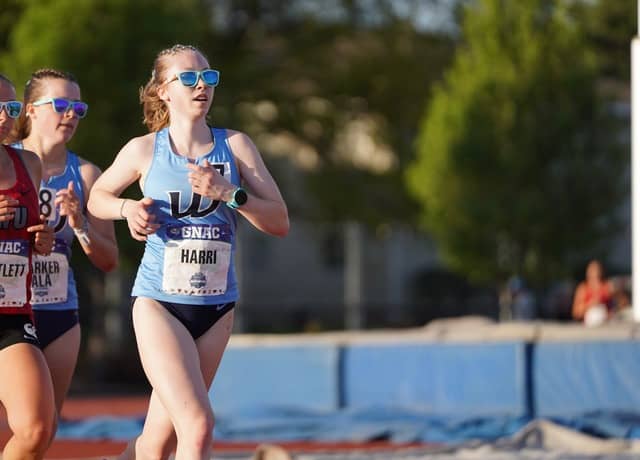
When I started running again, the process was slow. “Easy” runs weren’t actually easy for months. I couldn’t do any workouts until late January, but after a lot of patience I actually competed several times this past track season. Fueling my body enough is becoming second nature. I’m back to training and competing with my team, and it’s a blast.