More Than a Triathlete
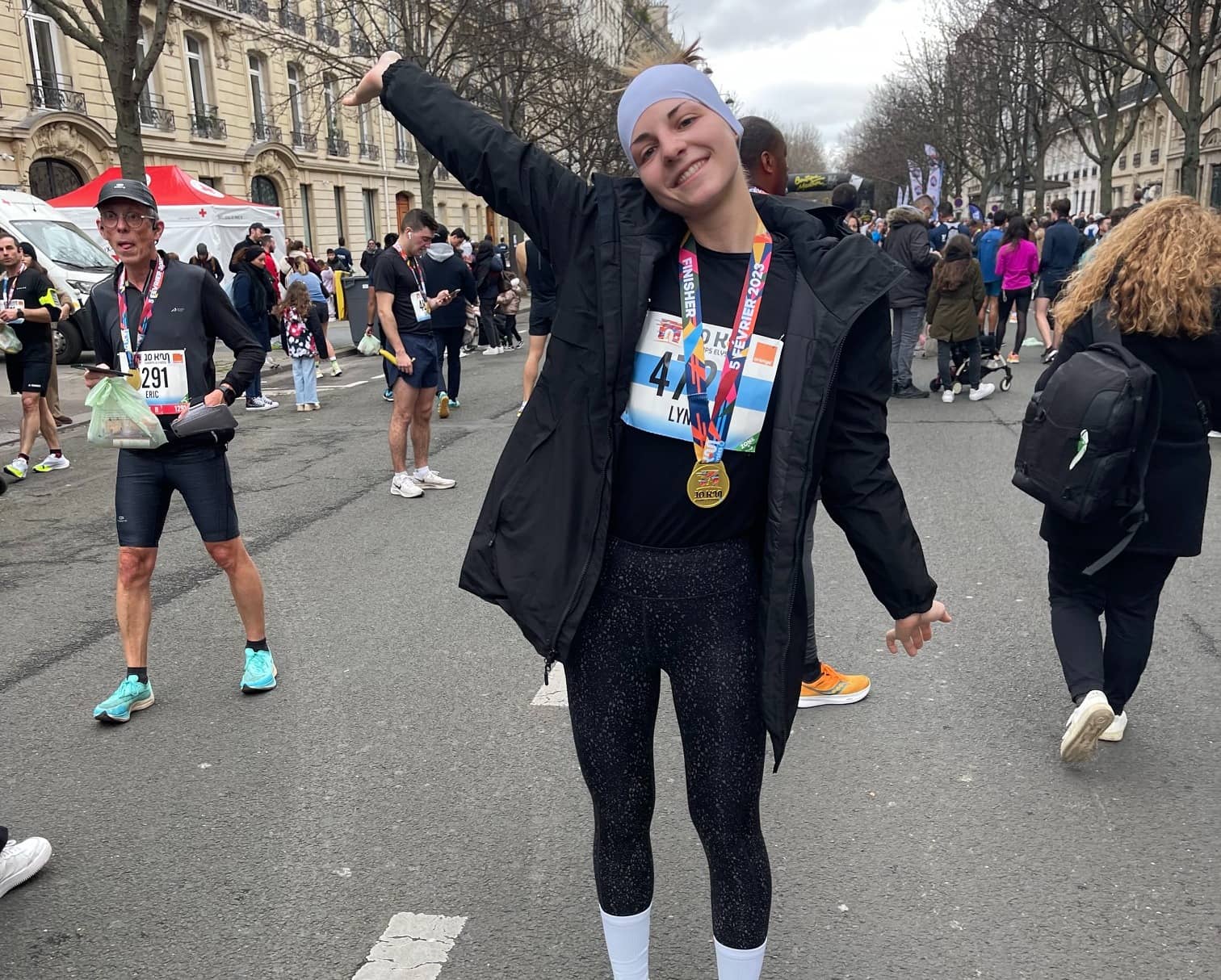
by Project REDs Ambassador, Lynn Feith
I was never a particularly athletic child. Sport was something I enjoyed from time to time, but it wasn’t a defining part of who I was. Then, in 2020, the world changed with COVID and I needed something to fill the hours. I found exercise.
At first, working out felt like a lifeline. It gave my days structure, made me feel productive and gave me a sense of achievement at a time when so much of life felt completely outside my control.
What started as a pastime quickly became something much bigger. I started working out for several hours a day. I became increasingly focused on what I ate and how much I trained.
I thought I was becoming healthier and stronger, but my body was telling me something different. Before long, I lost my period.
At the time, I didn't understand what that meant, so I didn’t listen. Instead, exercise continued to take up more and more space in my life. What had started as something that made my world bigger slowly began making it smaller.
Exercise started dictating when I could meet friends, what I could eat, where I could go and how my days had to be organised. My life increasingly revolved around training and burning calories.
Then, in 2021, I started a new job. Within a year, what I had hoped would be an exciting new chapter had become an absolute nightmare. I left that experience significantly traumatised. I needed to step away. I took a sabbatical, and this was when endurance sport entered my life.
First came running, which gave me a reason to keep moving forward. I started seeing results quickly. I found myself on podiums and achieving things I had never imagined possible. For the first time, I saw myself as an athlete.
Then came triathlon. I had always been fascinated by it, so I started swimming and cycling. Soon, I was training across three sports, and my first triathlon season brought success too. There were races, results, podiums and moments when I felt incredibly proud of what my body could accomplish.
But underneath that success, my body was struggling. Over the course of two years, I experienced seven bone stress reactions and injuries. Seven times my body told me that something was wrong. Seven times I had to stop, recover and try to rebuild. Even after my period eventually returned, my bones continued to break down.
For a long time, I thought that because my period had returned, everything must have been okay again. But my body told a different story. The bone stress injuries kept coming, my relationship with food continued to deteriorate and my thoughts remained dominated by training, calories and control."
The visible symptom was rectified, but the underlying problem had not disappeared. It felt as though my bones were cracking faster than I could get back into training.
At the same time, my relationship with food became increasingly complicated. The rules around eating and not eating became stronger. The more I trained, the more I felt I had to earn food, or compensate for it and everything became about numbers, calories, training and control.
More was never enough
The breaking point came in April when I pushed myself through a marathon despite experiencing terrible pain. I finished, but the consequences were devastating. I ended up bedridden for three weeks and on crutches for six, after suffering a Grade 3 femoral neck stress fracture.
Suddenly, the thing that had become the centre of my life was something I physically could not do,and that forced me to face a truth I had been avoiding for years.
Exercise had rescued me from some of the darkest moments of my life, it gave me purpose, community, achievement and something to look forward to. But at the same time, the way I’d learned to use it had started to take things away from me, making my world smaller and smaller.
I had become so focused on becoming a better athlete that I was losing sight of becoming a happier, healthier person."
Now I am learning that recovery has to be about moving away from those extremes. I am working with a team of professionals to find a healthier path forward.
I won't pretend it’s easy. There are days when stepping away from exercise feels almost impossible. There are days when choosing rest feels like failure. There are days when food, training and my body occupy far too much space in my mind.
At one point, my nutritionist asked me to come up with a quote that I could live by throughout my recovery. Something I could return to on the difficult days, when the old patterns and old fears became louder. I came up with three simple principles:
Fuel over fear.
Healing over haste.
Kindness over control.
Those words have become much more than a recovery mantra. They represent the person I am trying to become.
For years, I believed strength meant finishing the workout when I was exhausted, running through pain, or pushing my body beyond what it was telling me. Now I am learning that sometimes the strongest thing I can do is stop.
You do not have to destroy yourself to prove that you are strong and waiting until your body breaks is not the point at which you should start listening.