Not so invincible after all
Not so invincible after all
By Ambasador, Kate Willis
It’s a sunny April Saturday, and I’m out on my bike, thoughts occupied only by the coffee shop ahead, when my phone starts ringing. ‘Physio’ emblazoned across the screen. I pick it up, already knowing what it’s about. My MRI results are back. Significant bone oedema. A fracture line in my sacrum. Minimum 12 weeks of no running. No track season.
The physio asks how I feel. I make a throwaway comment about being fine. I’ve dealt with injuries like this before, I can do it again, but the truth is, I am at a loss. For the first time, a little voice in the back of my mind is asking if maybe this is it. Maybe this will just keep happening. Maybe I’ve pushed my body too far.
To make sense of that, I need to rewind.
Aged 20, I joined Birmingham University as an aspiring athlete. Suddenly, I was surrounded by fantastic athletes, coaches and facilities. Watching the other girls in the team achieve such incredible things inspired me to challenge myself, to set goals, and to see how far I could go.
At this point It’s pertinent to mention that I am a perfectionist. Not the type of perfectionist that always has a tidy room or ironed clothes, but instead the type to obsess over splits, sneak in extra cross training and add on reps. The type of perfectionism which can quickly become self-destructive.
Now, to return to the story. After starting at uni, I threw myself into training. My mileage gradually increased, and I discovered cross training. A few early season indoor 800m races showed that I was fit, and I was excited for what was to come. Then came the kicker. A passive comment about how I had ‘slimmed down’. It was clear that the slight increase in training, alongside a nutritionally deficient student diet, had led me to drop a few pounds.
I could have brushed this off and focused on my fuelling. Instead, I took the comment as a challenge. How much more could I lose? How disciplined could I be? How far could I push my body? I am a perfectionist after all."
Over the following months my food rules tightened and my obsession with exercise grew. My weight plummeted and my period disappeared. For a short time, my running performance improved, adding fuel to the fire. Of course, this was transient, and soon things began to unravel. During my first experience of altitude in font Romeu, I found that sessions which should have been easy felt impossible, and I was fighting to complete reps. Away from the track, everything felt dull, and I was constantly on the verge of tears
In hindsight, it is scary to think about what could have been, had my wonderful, and very observant coach not stepped in. Although I had not acknowledged that there was a problem, he had correlated my change in appearance with my sudden performance drop. After a particularly tearful session, he pulled me aside and initiated a conversation that I was not ready for, but that would form the base of my future recovery.
On my return from altitude, I entered a phase of quasi-recovery. I knew there was a problem, but I was powerless to resolve it. My period remained absent; however I remained injury free, luring me into a false sense of security. I told myself that my issues with food weren’t bad enough to cause a stress fracture. I would be fine."
Over time, with support from a psychologist, my coach, family and friends, things began to shift. I was formally diagnosed with anorexia and started therapy to overcome this. Blood tests showed my oestrogen levels were undetectable, and a DEXA showed osteopenia, and so I started hormone replacement therapy to protect my bones. Slowly my fuelling and mindset improved, but my period had still not returned. REDs still well and truly had its claws in me.
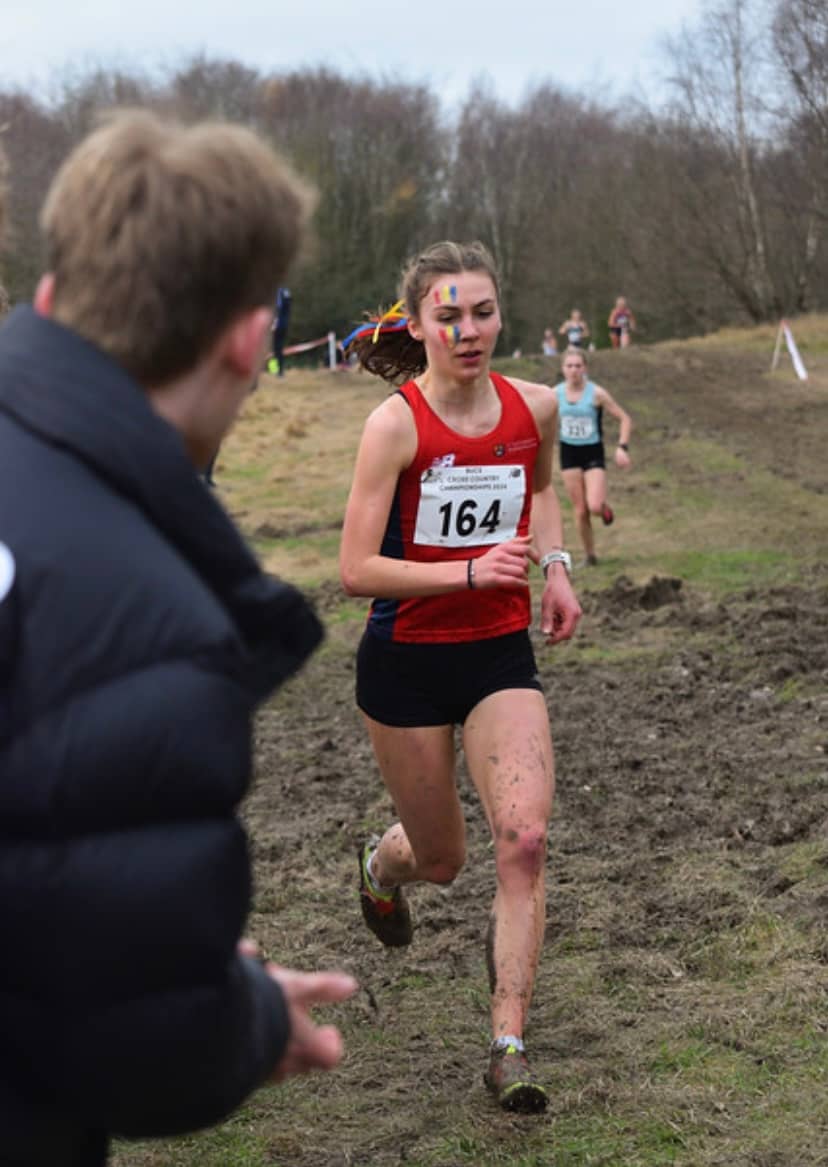
The improvement in my fuelling and increase in my weight led to a substantial performance rise. Training clicked again. I made my first BUCS A team and eventually qualified to represent GB at the European cross-country championships. I had still not experienced a single injury. I told myself my previous fuelling issues were just a ‘blip’, and I was out of the woods. Oh how wrong I was…
A few months later, during my first steeplechase race, I felt a sharp pain in my back. In the weeks that followed, the pain worsened, radiating, aching and waking me at night. It became something I couldn’t ignore. An MRI showed a sacral stress fracture,
My first bone injury. I was not so invincible after all.
This was the wake up call I needed, and I took it seriously. I stopped all exercise and gained a significant amount of weight. For a couple of months, now affectionately referred to as my ‘sedentary summer; I barely moved. My energy intake was high. My expenditure was low. This was the security my body needed, and after 3 months my period returned. Celebrations ensued, and I joked to my friends that I had ‘beaten REDs’. I was so painfully unaware of the damage 4 years of amenorrhoea had inflicted on my body.
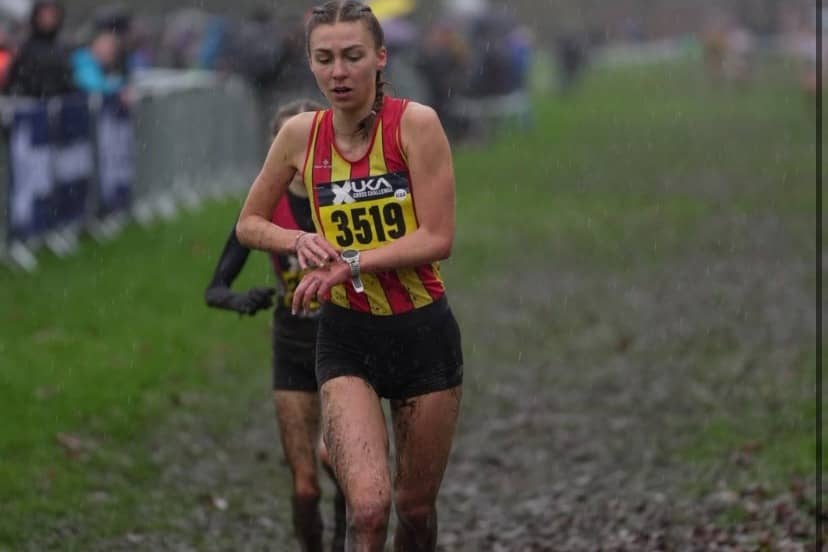
After the return of my period, I rebuilt slowly. Months of cross training, before a very conservative return to run program. Before I knew it, I was back to full training, and even managed to sneak a few races in. Things were looking up. Until a rainy march day, almost a year after my first injury, when a sharp pain appeared in my back mid-run, on the opposite side to my previous fracture. I knew what it was immediately.
And that brings me back to now- another stress fracture, another long period of rehab, this time with the uncertainty as to whether my body will be able to hold up.
These injuries- especially in places such as the sacrum- are key indicators of low energy availability and hormonal deficiencies, and I can say with certainty that my past underfuelling is a key cause of my current predicament. The hardest part is, bone stress injuries rarely happen when you are struggling. Instead, they pounce when you think you’ve made improvements. When you’re trying your hardest to do everything right- a legacy of the damage previously inflicted.
The reality is, I now no longer know what my body is capable of, and what my limits are. I don’t know how long it will take to reverse this damage, or if it is reversible at all."
I hope that in the future, I will be able to show that REDs is not the end of the story, and that it can be overcome. But before that, I want to be able to use my experience and my passion to contribute to the rapidly growing understanding of the condition. It is not just up to athletes to spot the signs- I believe strongly that educating coaches, parents, teammates, physios and GPs is the key to preventing future athletes from falling into the same traps that so many young athletes experience, and I cant wait to contribute to this as part of project REDs.