REDs at Any Size
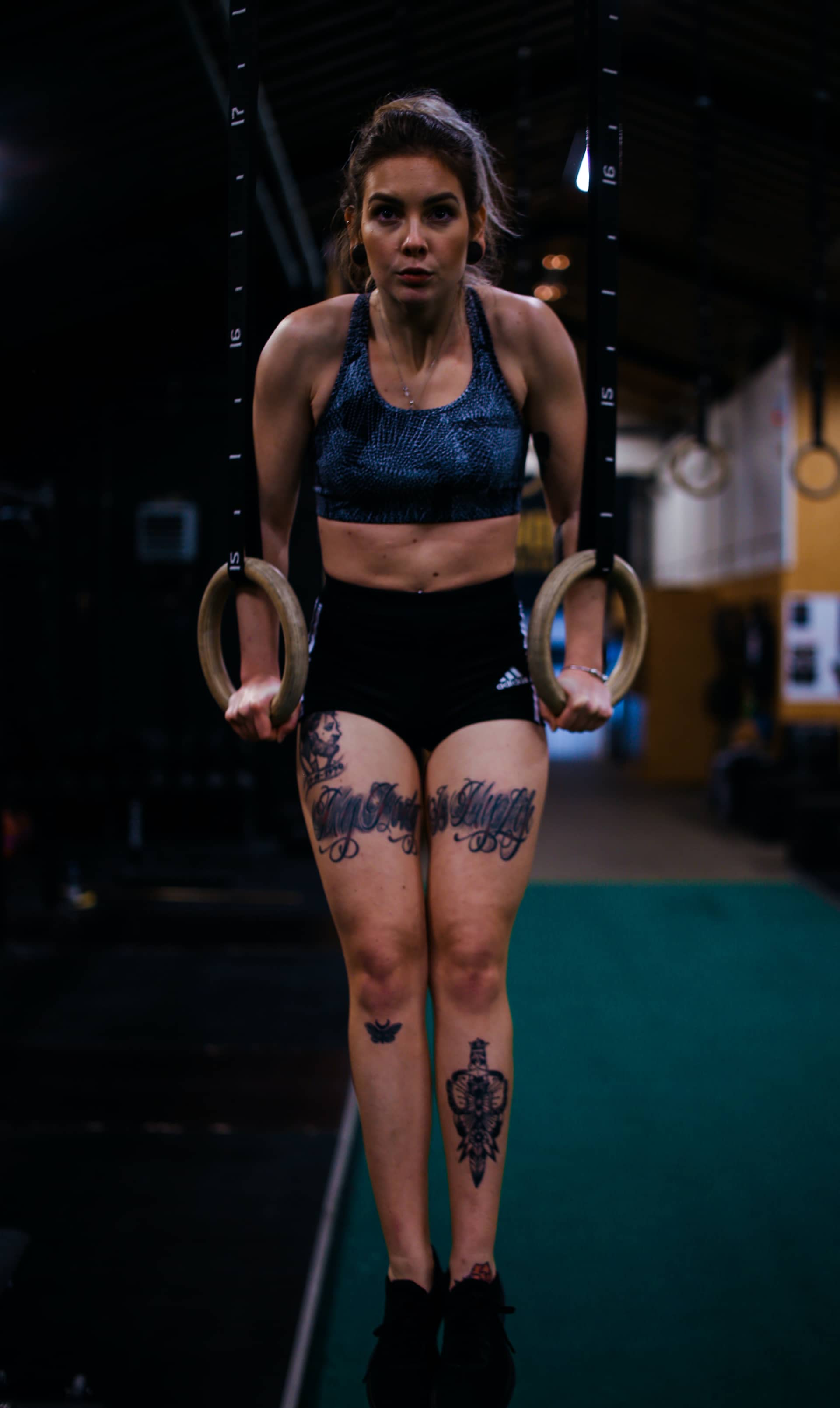
One of the most misunderstood aspects of REDs surrounds how someone can appear 'overweight' while still being significantly under-fueled. This is because someone who is struggling with body composition may actually be dealing with hormonal disruption caused by chronic under-eating, often combined with poor sleep, stress, and a growing disconnect from hunger and fullness cues.
When it comes to weight loss, the science seems simple: eating more calories than we expend = weight gain. Eating less calories than we expend = weight loss. But our bodies are rarely that simple.
We’ve spent millions of years evolving into finely-tuned machines that know how to protect us from unwanted weight loss. Why? Because, back in the day when our ancestors faced food scarcity and predators, preserving energy was a matter of life or death. And, while this might not be a problem anymore, our bodies have adapted to help us maintain homeostasis regardless, via a few main mechanisms.
When faced with a prolonged calorie deficit, various hormones begin to slow down the metabolism to preserve energy for essential functions (e.g. movement, to out-run those predators). Since our metabolic rate (how many calories you burn at rest) represents roughly 60% of our total daily energy expenditure (depending on various factors like body weight/composition, age, gender and genetics), slowing it down in an attempt to minimise energy expenditure serves to prevent weight loss.
Often, various lifestyle factors come into play as well, even if they aren’t always obvious. While you can distinguish between escaping a lion’s lunch and the stress of an upcoming exam or a training session, your body can’t, and the stress response is the same. The result is an increase in hormones such as cortisol, adrenaline and insulin which, when produced in abundance, contribute to fat storage.
The compensation effect
As explained by this research, “Increasing levels of activity may bring diminishing returns in energy expenditure because of compensatory responses. People who compensate more may be more likely to accumulate body fat. Alternatively, the process might occur within individuals: as we get fatter, our body might compensate more strongly for the calories burned during activity, making losing fat progressively more difficult”.
At first, the body’s reaction to these stressors may be subtle. Hormones and the metabolism take time to adapt, yet typically, the more extreme the energy deficit, the more significant the response. While every individual is different, research examining the effect of a calorie deficit on all body tissue has shown how individuals with more body fat tend to experience slower adaptations compared to those with less body fat, whose “adaptive thermogenesis” tends to be more extreme. Ultimately, if your body doesn’t deem itself to be in a safe environment (e.g. in a state of REDs), it will do whatever it takes to preserve precious energy.
REDs can occur at any size
As explained by this article on the topic of eating disorders, “Too often, we don’t worry about someone’s relationship with food and body unless they’re visibly emaciated, or they’ve lost a significant amount of weight in a short time”. This often leads to overlooking the crucial bottom line when it comes to REDs: low energy availability can occur at any size.
So what should athletes (or their coaches and caregivers) actually do?
Firstly, zoom out. Instead of focusing purely on body weight or appearance, look at the bigger picture:
Am I recovering well?
Am I energetic in training?
Am I sleeping properly?
Am I getting ill or injured frequently?
Are food thoughts becoming obsessive?
Is performance progressing sustainably over time?
Are menstrual cycles, libido, morning erections mood and motivation healthy?
These markers often tell us far more about our health than appearance alone.
Secondly, avoid reacting emotionally or impulsively to body composition changes, particularly as a younger athlete. Puberty, exams, stress, reduced sleep, hormonal fluctuations, injury and changing training loads can all temporarily influence body composition. And across the lifespan, our bodies are also meant to change through different phases of life and sport.
Rather than jumping to restriction or punishing yourself with training, the safest and most effective approach is usually to return to basics:
Consistent, adequate fueling
Balanced meals and snacks
Sufficient carbohydrate intake
Recovery nutrition
Sleep and stress management
Strength training
Sustainable training volume
In many cases, once the body feels safe again, health, body composition and performance naturally begin to regulate more effectively.
And importantly, if body composition genuinely does need addressing from a performance or health perspective, it should be done carefully and professionally, ideally with support from a sports dietitian and wider healthcare team. The goal should never simply be “weight loss at all costs”, but becoming healthier, stronger, better fueled and more resilient long-term.
Because ultimately, people do not thrive when they are constantly fighting their bodies. They thrive when their bodies trust them.
Take a deeper dive into the research below ↓
https://pubmed.ncbi.nlm.nih.gov/27136388/ https://pubmed.ncbi.nlm.nih.gov/23404923/ https://www.ncbi.nlm.nih.gov/pmc/articles/PMC3673773/ https://pubmed.ncbi.nlm.nih.gov/34054716/