The Cost of Control
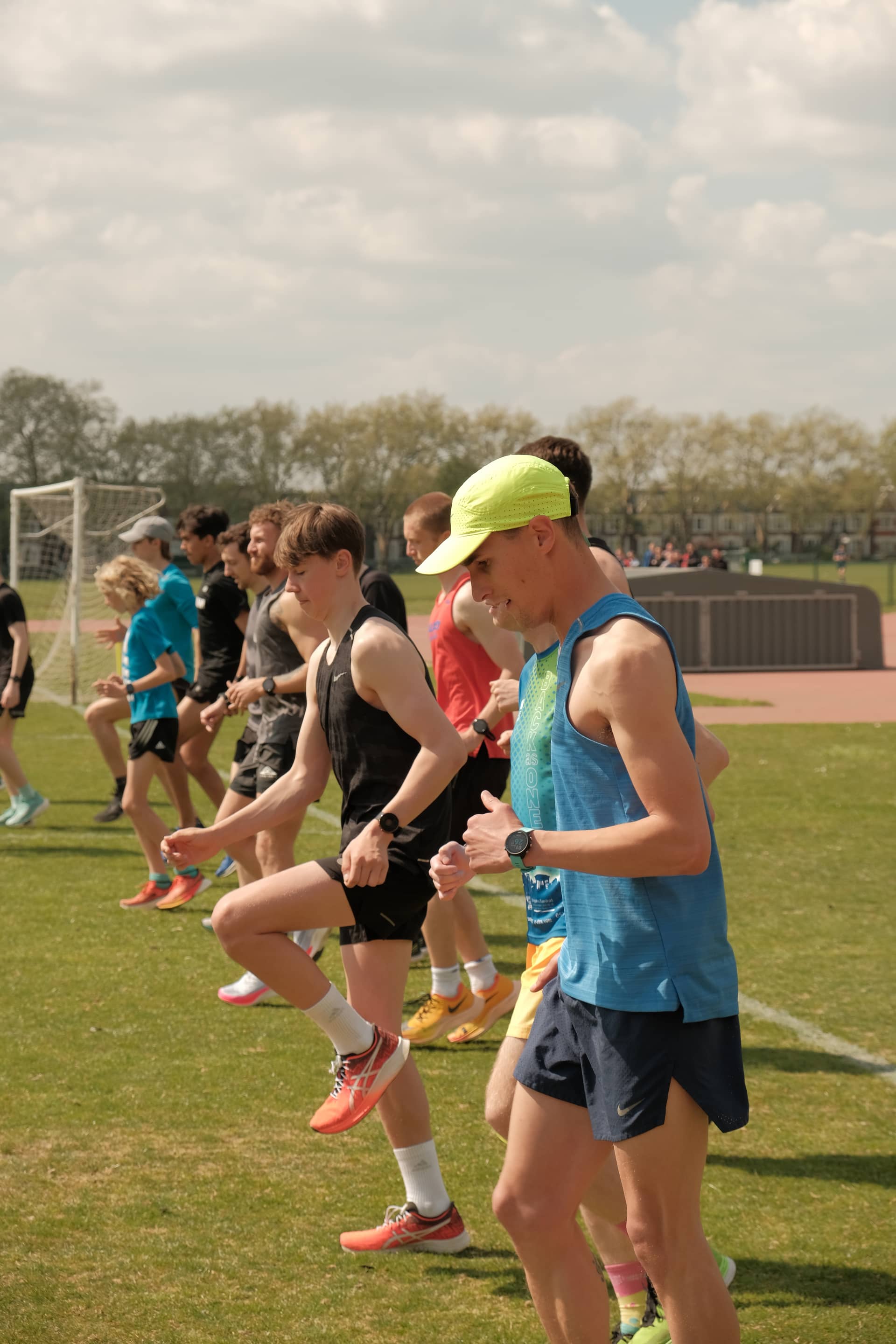
Guest writer and Project REDs ambassador, Robbie Millar, shares what happens when chasing performance costs you your health.
I was always a strong kid. Whilst being a bit bigger than my peers (not in height), I took pride in my strength. My body took to rugby, and it allowed me to excel to the point of being in a development program for a professional Scottish team. For some reason, despite everything that it gave me, I loathed the look of the body it came with. In fact, from about age 11, I was obsessed with being ‘healthier’, losing weight, and trying to look like my peers who seemed to naturally stay slim and looked less awkward in their clothes".
After the UK lockdowns, I gave up playing rugby as a lot of the joy had gone. This left an athletic hole in my life that I decided to fill with bodybuilding/powerlifting. This introduced me to the joys of calorie and macronutrient tracking. Initially, I was somewhat healthy about it, just trying to hit my protein goals and gain muscle, but it soon became more than that.
I’m ashamed to admit this as I now feel I stole an element of my teenage experience from myself, but from the ages of about 15-18, I tracked everything I ate. This was not passive tracking alongside life; it was my life. I got joy from being exactly on track and stressed when control over a meal was taken from me, like when going out for dinner.
I continued like this until my 2nd year of university, when I decided to sign up for a marathon on a whim. This was great, running is great for your mental and physical health, you get to experience new parts of where you live, oh and my favourite at the time, you burn much more energy per day!
Whilst I did genuinely adore running and having a structured training plan, something I had never really had before, the joy I got when I checked my calories burned on my watch was something else. Where elites would see a number necessitating immediate recovery nutrition, I saw an opportunity. I could eat as much of whatever I wanted for dinner as long as I controlled everything beforehand..
I completed that marathon, and I loved it. I may have bonked from fuelling with 3 dates to save up for the buffet my parents had booked for the celebration, but I really did love my first-ever endurance event".
That love grew over the following summer, and by the time 3rd year of university started, I had signed up for an Ironman, as you do when your swimming and biking experience extends to not drowning in a pool and 10-minute warmups for gym sessions on a Wattbike.
Alas, I joined the triathlon club at my university and found my people. Although I felt like an outsider who didn’t belong in an endurance circle, I was made to feel so welcome. I got stuck in with training, and the improvements I was seeing were genuinely unbelievable.
But in the background, that familiar pattern of under-fuelling crept back in. , Only this time, the double/triple training days meant I was no longer making up the caloric deficit with my fantasy dinners. I would start dinner starving and end with the sensation that a monster was trying to escape my belly.
I was painfully full, yet still craving more food. As the months ticked by, my bathroom scales saw more use but didn’t progressively overload due to the declining load on them".
The thing I am ashamed to admit is that these issues didn’t just affect my performance. It affected the people around me. While I maintained a happy front to my peers, I was a nightmare to be around in my hangry state behind closed doors, starting arguments with my partner and loved ones, and being so sensitive that I would cry at small inconveniences.
After realising that I was constantly freezing, needing to pee all the time, and had essentially zero libido, I decided to see a GP.
Initially, I was told that the bedroom issues were psychological. I remember their exact words: “I get tons of young men come to me with the same problems, 99 times out of 100, it is completely benign, a mental issue”. I believed them; they were the expert.
After months of me blaming myself and my “overthinking mind” for my lack of a single erection, I was in a bad way. I felt so ‘unmanly’, and so disconnected from who I was. The social confidence I used to be known for had turned into into avoiding leaving the house and having no energy to engage with life.
Eventually, I saw a new GP who arranged for some blood tests. My testosterone came back as <0.3 nmol/L, essentially undetectable. (ThWorld Athletics’upper limit for female athletes’ testosterone is 5nmol/L!).
Given the shocking results, an MRI was ordered in case of something sinister like a pituitary tumour. The results showed nothing obviously negative, though the practitioner had a sneaky suspicion I was taking exogenous testosterone as a performance enhancer. In fact, over the next month of our correspondence, every interaction would begin with the next test we should run, followed by the caveat: “if you are sure you aren’t taking steroids”...
What changed everything was a conversation with a friend. On a bike ride where I was clearly under-fuelled, they casually mentioned a podcast by a dietitian, Renee McGregor. For two days straight, I listened to stories and research about low energy availability. For the first time, everything made sense.
What was obvious to others, I had never seen. Mentally, I was still that “bigger kid”. I never thought I could be at risk.
Of course, the path to recovery is different for everyone. Some people need full rest and a complete cessation of training; some people just need to ramp up energy intake and improve nutrition timing, while I still had the Ironman to do. By race day, I had put 4 weeks into reclaiming what disordered eating and body image struggles had stolen from me.
While I felt better, the hole was deep. However, too much money had been spent on the race, so I showed up and got it done. Of course, I’m proud of the achievement, but looking back, I’m ashamed of the approach I took.
On race day, something shifted. I fuelled more than I ever had. And for the first time, I felt what my body was capable of when supported. Three hours into the bike, I started talking to myself. What began as confidence turned into emotion. I found myself crying, realising what I had put my body through.
I swore in that moment to focus on what my body can do, not how it looks while doing it. Honestly, the day after, I wasn’t even all that tired. I think the lack of energy in my body had put such a limiter on my output that I couldn’t push hard enough to get sore.
The months after were messy but necessary. I ate more than felt comfortable. I gained weight. I felt out of control at times. But slowly, my body came back. Not just aesthetically, but functionally. My skeleton gained some protection again, my hormones improved, my strength returned, and so did my energy.
It was as if my body was just absorbing everything I gave it, putting it right back into essential processes and rebuilding muscle. I got some green-light bloods from the GP, and a new endocrinologist I had been seeing confirmed my belief that this was all caused by an acute period of extremely low energy availability".
Now, I have my strength back, I’m fitter than ever, I fuel my training like my life depends on it (because it does), and food is no longer something to control, but something that supports me. Basically, if you feel a little funky while training hard, throw a few more slices of pizza on that fire and see what happens. Fuel your work. Support your body. Respect the process.
Because what’s the point in training hard if you’re not giving your body what it needs to adapt?