The Price of Pace: Finding Stillness in the Drive
The Price of Pace: Finding Stillness in the Drive
By Ambassador, Ana Barroso
In my family, "hard work" was our physical inheritance, but it arrived from two distinct worlds. My father’s side cultivated my appreciation for precision, data, and academic detail. From my mother’s side, I inherited a profound dedication to sport.
Growing up in the Chicago suburbs, my years were beautifully split: school terms in Illinois, and summers and winters spent visiting family in Mexico. In Guadalajara, my great-uncle, Hugo Hernández, was a celebrated figure in professional soccer. Even when his career took him far away, his legacy anchored our family gatherings. My cousins and I would spend hours playing on a rough patch of concrete behind my grandmother’s house. It was on that concrete pitch that I first understood movement not as a metric, but as pure connection and joy.
As I grew older, those early influences coalesced into an intense internal drive. My childhood was shaped by two familiar phrases: Échale ganas and Ponte las pilas. To give everything, and to remain sharp. My grandfather, a recovered alcoholic who became my gentlest advocate in sport, and my brother, who channeled his own setbacks into software engineering, were my models for resilience. I also carried a quiet, generational awareness, a realization that because my parents left Mexico City to prioritize our education, I could not afford to waste the space they created for me. To me, being an athlete meant maintaining an engine that never stalled. Resilience wasn’t just a discipline; it felt like an obligation.
But there is a delicate line where discipline ceases to be a tool and begins to obscure our well-being. For many young athletes, myself included, Relative Energy Deficiency in Sport (REDs) is rarely a crisis of food or body image. It is a profound search for certainty. When the world feels entirely unpredictable, tightening our hold on our routine becomes an act of self-preservation."
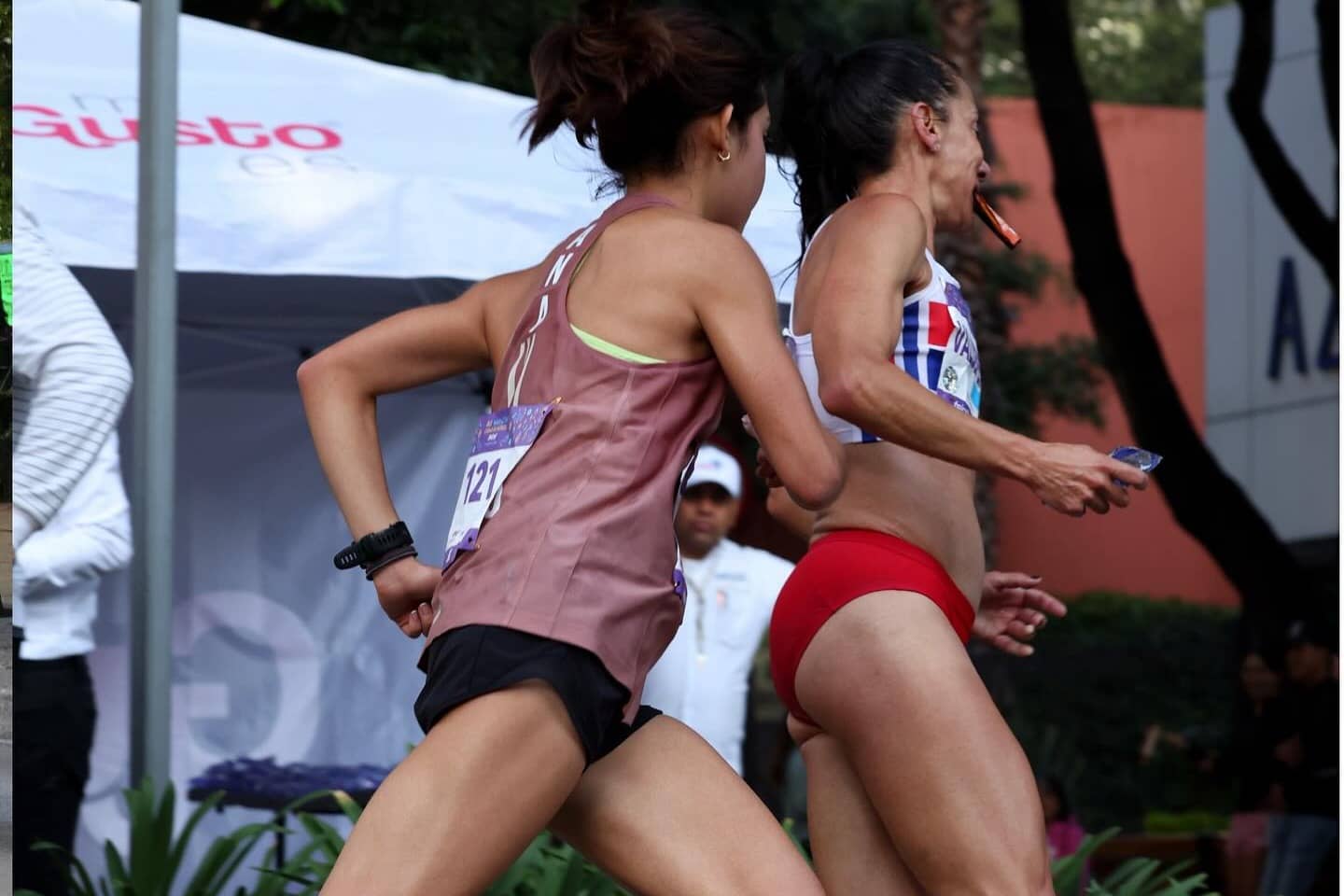
When I arrived at university to compete in cross country, the structured rhythm of my academic goals joined the familiar demands of competitive running. But when life loses its predictability, our natural instinct is to simply tighten our grip. During this time, my mother was navigating a complex inflammatory condition that targeted her trachea, requiring surgical interventions every few months to keep her airway open. Witnessing a person you love face such a persistent physical vulnerability forces a subtle, internal friction within your own choices. I found myself caught in a delicate conflict, trying to honor my family’s physical fragility while demanding absolute resilience from my own body.
Amid that pressure, I looked for an anchor. I retreated into my routine, operating under the assumption that if I could perfectly manage my mileage and my schedule, I could prevent the rest of my world from drifting. I misread exhaustion as discipline, convincing myself that pushing through profound fatigue was a virtue. In reality, the tighter I held onto that control, the more distance I put between myself and actual health.
Then, during my freshman year, I stepped on a rock. In a fully nourished body, a minor impact is a footnote. But in a system gradually depleted by low energy availability, the body loses its capacity to remodel and repair. That minor misstep triggered soft-tissue inflammation across my midfoot, an injury my body lacked the resources to heal. Ultimately, this physical limitation, alongside broader signs of systemic fatigue and a lost cycle, recentered my focus. Recognizing that my health required absolute priority, I paused my collegiate training to focus on recovery. It was a stark reminder that the rituals I used to keep myself upright were the very things causing me to break.
Forced to slow down, I was finally made to look at the patterns I had so carefully constructed. When immersed in the momentum of an overwhelming schedule, it is remarkably difficult to discern where discipline ends and depletion begins.
Looking back on that period of uncertainty, I had to sit with several heavy truths. I learned that longevity must outpace immediate ambition, that our bodies are not temporary vehicles for achievement, but the only home we are given. I realized that raw intention requires the education to fuel and rest correctly; without that understanding, drive simply becomes self-destructive. Perhaps most difficult of all, I had to dismantle my own pride. I had spent so much energy projecting a veneer of composure that I had ignored the very people who noticed I was fracturing. Overcoming that stillness required a radical, internal honesty about my health and my finite limits.
My transition from a Division I athlete to a graduate student in Healthcare Data Science was not a failure of momentum; it was a graduation into a deeper understanding of what it means to endure. I came to realize that my identity was never anchored to a jersey or a specific pace, but rather to the quiet resilience my grandfather and brother had modeled for me all along.
To the athlete caught in the same cycle: your value is not an optimization problem. You do not have to constantly earn your food, your rest, or your space in this world. Sometimes, the most rigorous discipline lies in the willingness to slow down, to step beyond the routine, and to accept that you are inherently greater than the metrics you track. We should not have to wait for a rock to break us before we choose to listen. You are allowed to be healthy. You are allowed to be whole.