When Discipline Becomes Identity
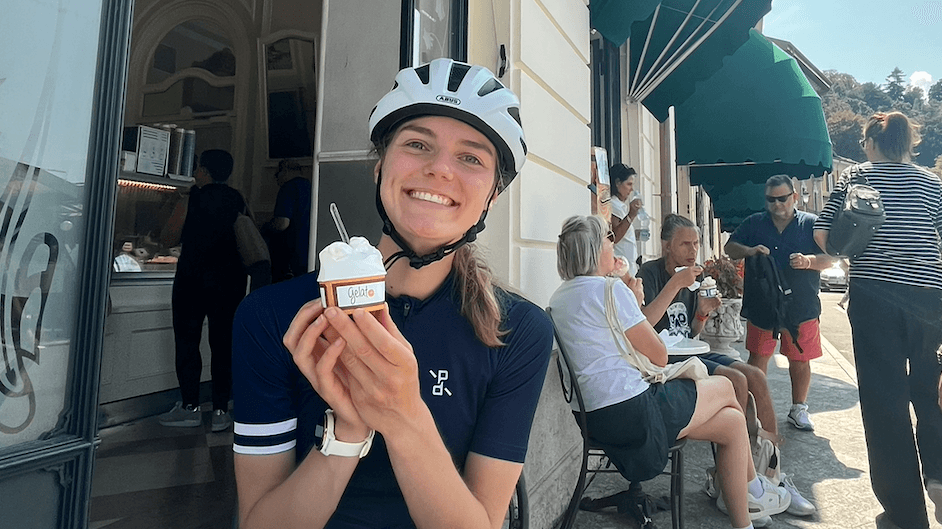
By Project REDs Ambassador and guest writer, Jolien Deboutte
I’m originally from Belgium, but I grew up moving around the world with my family. Before I turned 18, we had lived in five different countries. Oregon, a place with deep cultural and historical roots in running, became our final home as a family. There, I competed in cross country and track throughout high school. I trained hard, but that was not unusual. The system was built that way: structured around us being athletes, with multiple sessions a day, high mileage, and constant progression. It did not feel extreme, it felt normal. I did not realize it at the time, but that is where running became more than just a sport.
Without really noticing it happening, I stopped seeing myself as someone who ran. I was a runner".

After graduating from high school, I moved back to Belgium to study Sports and Movement Sciences at university, while my family stayed behind in Oregon. Even though I had returned to my home country, nothing felt stable or familiar, except running. So I held onto it. Most days, I felt lost, but training gave me structure and purpose. It gave me something to organize my life around. Until my body forced me to stop.
For a while, injury took running away from me, and with it, my sense of self. My body changed, and I no longer looked like the runner I believed I had to be. So I tried to control what I could: food. Restriction felt like a solution at first, but it quickly turned into a cycle of restriction and overeating that kept me trapped. The inconsistency made me feel ashamed, as though I was losing myself. So I convinced myself that the answer must be stricter control and more discipline. By then, my injury had healed and I had started training again. Through strict control over food and a return to training, I regained the identity I felt I had lost. Or so I thought.

From the outside, nothing seemed wrong. I looked healthy, disciplined, and in control. But underneath, my body was struggling. The original injury had healed, only to be replaced by a cycle of new injuries. But this time, when I could not run, I held onto the lifestyle I believed was the only one that gave me purpose. I cycled, swam, or walked long distances. There was always a way to keep moving, always a way to avoid stopping. In my sports science courses at university, we learned about nutrition through numbers, guidelines, and recommendations, all reinforcing a similar message: move more and eat healthier. So I followed everything. I tracked, counted, and exercised unconditionally.
Everything looked right. But nothing felt right."
Physically, I was always tired, cold, and sleeping poorly. I noticed that I had not had a menstrual cycle in quite a while, but I did not question it. It felt convenient. And when I asked a doctor about it, it was dismissed as “normal for athletes.” Mentally, I stopped feeling like my ambitious, caring, bubbly self. Instead, my days became filled with resentment, rigidity, and anxiousness. Above all, I felt lonely.
It took years before anyone noticed that something was not right. And when others did notice, it was not because my behaviours had changed, but because my body had. Weight loss made things visible. But by then, my disordered thoughts had become the absolute truth to me. I did not see a problem. I ignored comments from family and friends and became angry at anyone who questioned me. I did not want to change because changing meant losing what I believed made me who I was.
Then something shifted.
I had been seeing a psychologist, and one day he gave me a writing task in which I had to convince myself that I wanted to continue living this way for the rest of my life. I began by writing that I wanted to feel in control and that I wanted to stay an athlete. But then I wrote about everything that came with that life. I wanted my family to worry about me. I wanted to feel anxious when I could not exercise. I wanted to skip social events so I could control my food intake. I wanted to risk my long-term health. Seeing those thoughts written down changed something.
For the first time, I realized that I did not actually want the life I was living. I wanted to recover."
Recovery meant doing the opposite of everything I had learned and everything that had been praised around me. Eating more and moving less instead of eating less and moving more. Letting go of control instead of holding onto discipline. This was hard. Very hard. By this time, I had completed my master's degree in Movement and Sports Sciences and decided to start a PhD. I had been, and knew I would continue to be, surrounded by messages encouraging the exact opposite of what I needed to do to get my life back. Those around me would continue to emphasize more movement and more discipline.
Again, I felt lonely. So I searched online for stories from others who had gone through similar experiences. It was difficult for me to believe that I would ever be able to tell a story from the other side of recovery. But gradually, I gathered more and more evidence to convince myself that I could. In my daily life, I did not
feel understood. But through reading, listening to, and watching the stories of others who had experienced the same thing, I stopped feeling so alone. Combined with ongoing support from a psychologist, I slowly convinced myself that I was doing what was right for me. After five years of feeling stuck, I finally felt as though I was moving in a different direction.
And after about a year and a half, I felt that I had recovered mentally. I had regained my identity, not as an athlete, but as a person. I was still hard-working and disciplined, but those characteristics were only a part of me. I no longer held onto them unconditionally. I was also caring, joyful, emotional, social, and occasionally a little silly.
Even though I had recovered mentally, I knew that something still was not right physically. My menstrual cycle had not returned. At first, I ignored it again because it still felt convenient, and health professionals
continued to tell me it was “normal for athletes.” But then I developed two stress fractures, followed by a bone density scan that made the consequences of years of underfueling and overexercising impossible to ignore.
I had known that losing a menstrual cycle could reduce bone density, but I had convinced myself it would somehow be different for me. That I would be the exception. But the results were clear, measurable, and real. And I had to admit that it made sense."
I was angry at myself. I allowed myself to grieve the years of happiness and health that I had lost while being caught up in behaviours with consequences like these. But after enough tears, I realized that the past was the past, and that the only thing I could do was move forward from that point on. But how? I was weight-restored and felt that I was doing everything right. I did not know what else I needed to change. So I sought advice. But the advice I received was conflicting. A gynecologist prescribed hormone replacement therapy. An endocrinologist told me the hormones would not restore my natural cycle and recommended I stop. My doctor could not explain why my cycle had not returned and admitted that she did not know what advice to give me.
Again, I felt on my own. So again, I searched for information online. I learned about REDs. I recognized myself in it and began to understand that recovery was not just about restoring weight. It was about energy availability, meal timing, exercise, stress, and overall safety. It was about convincing my body that it no longer needed to survive.
After gathering all the information I felt I needed, I concluded that the final factor keeping my menstrual cycle away was exercise. It had been lingering in the back of my mind for a long time, but because none of the health professionals I spoke to suggested that exercise might still be holding back my recovery, and because exercise was continually framed as healthy, I continued doing it. But now, mentally recovered and better informed, I accepted that this might no longer be true for me. And for the first time, I chose to restrict my exercise, not because I was injured, but because I wanted to heal.
And after seven years without a menstrual cycle, my period returned. It felt like a greater achievement than any workout I had ever completed. But only a moment later, I realized that one cycle was not the end of the story. I still had to hold myself accountable. I made a deal with myself to wait for three consecutive cycles before increasing exercise again. So I continued eating more than I thought I needed to and moving less than felt comfortable. Then I waited anxiously for the second cycle.
That waiting was one of the hardest parts because it filled me with doubt and uncertainty. Was I doing everything right? Then came the second cycle, and I felt just as relieved and happy as I had the first time. But then came more waiting. Would the third come?
It did not arrive on time.
As happy as I had felt after the first and second cycles, I felt equally devastated when the third did not come as expected. But after another difficult week of frustration and disappointment, it finally did. I know now that this irregularity is common during cycle recovery, but knowing that does not necessarily make it emotionally easier. I am certain that I will continue to feel tense every time I am supposed to get my period in the months ahead. But whenever it does come, it will remain a reminder of the strength it took to regain my health.
Today, I consider myself recovered, and I know with certainty that if I had not found online resources and recovery stories related to REDs, I would not be where I am now. Because in my real-life community, and even within healthcare, this information was largely lacking. And that is troubling. Athletes at every level experience REDs, often quietly, unnoticed, and misunderstood. Even in the courses I took to obtain a master's degree in Movement and Sports Sciences, where future professionals are educated to support athlete health and performance, REDs was barely discussed.
That silence matters, because without awareness, harmful patterns can easily be mistaken for dedication. And when no one questions them, they continue."
That is why I want to raise awareness within my community: for athletes who feel trapped in patterns that look like discipline, for professionals who genuinely want to help but do not always recognize the signs, and for friends and family members who sense that something is wrong but do not know how to respond.